Blog

Backbends part 3: Techniques

In the last post I talked about how backbends don’t have to be super deep, contortionist looking poses. They are simply any pose where your heart comes forward and your shoulders move back and down. This could simply be standing up with an exaggerated “good posture” for some.

A nice way to preform a backbend every day is to clasp your hands behind your back as you lift your chest and collarbones upwards. This is useful when you’re walking in a relaxed manner or have been sitting for too long (examples: hunched over a table or computer). 🤚

Taking the time to preform a short Backbend Asana Practice will be the most effective.
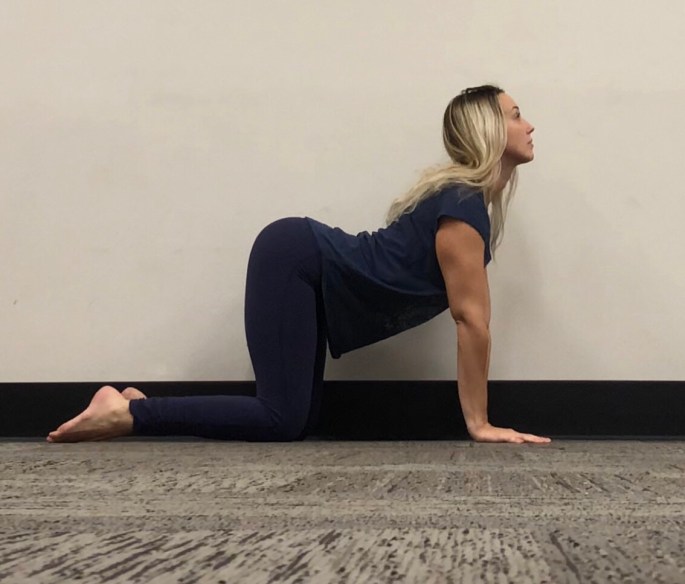
Start with cat and cows with more emphasis on the cow portion. If you have lower back pain keep the lower back neutral or in a slight tucked in position and work on the shoulders and chest.

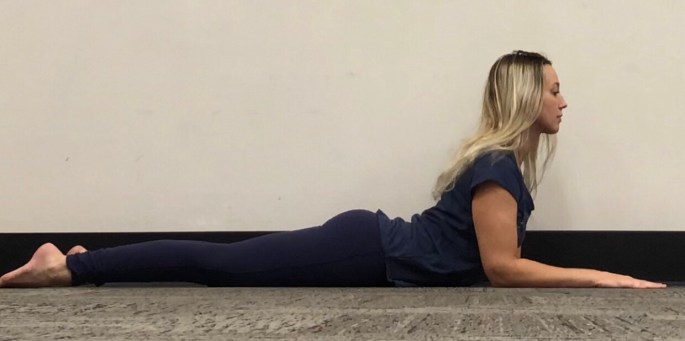
Moving on to some small cobra or Sphinx asanas will be next. These will allow you to test your upper body strength as well as ease into a deeper backbend. These can be repeated for repetitions as desired.
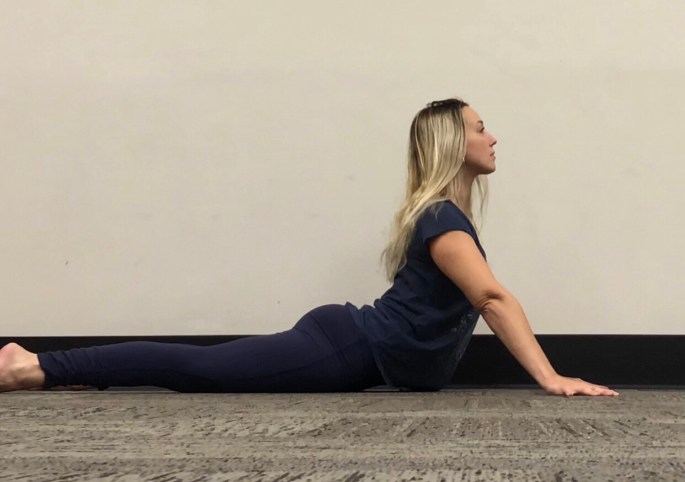
Next, try for Seal Pose. This is a Yin Pose. These poses are held for longer periods of time and allow for more relaxation to occur in your body. This does not mean you may feel relaxed though. You might need to keep your core active so that gravity doesn’t pull you too much into a deeper backbend –then you are ready for. Blankets and pillows help here, as well, if you want to really relax. Simply place them under your chest and belly just above your hip bones. Hold for 2-8 minuets.

You can come out of the Pose and reenter as often as you would like. You might also find that you don’t need the pillows and blankets as you relax further. This is a highly meditative pose so trying to meditate while holding this pose is recommended. (Check further down for some meditations)

Lowering down from this pose till completely flat with your arms stacked and your forehead resting on them: bend your knees and lift your feet to the sky. Rock back and forth on your thighs to relax your lower back.

Moving into camel pose:
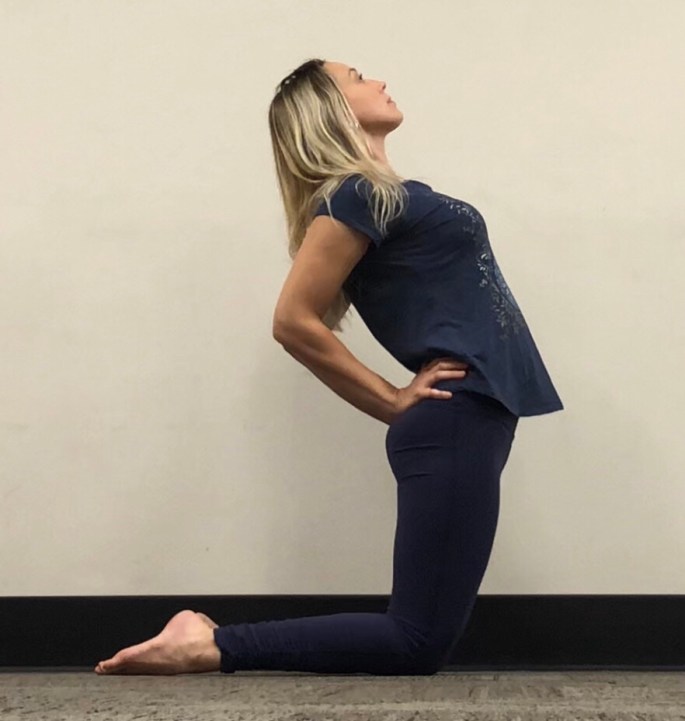
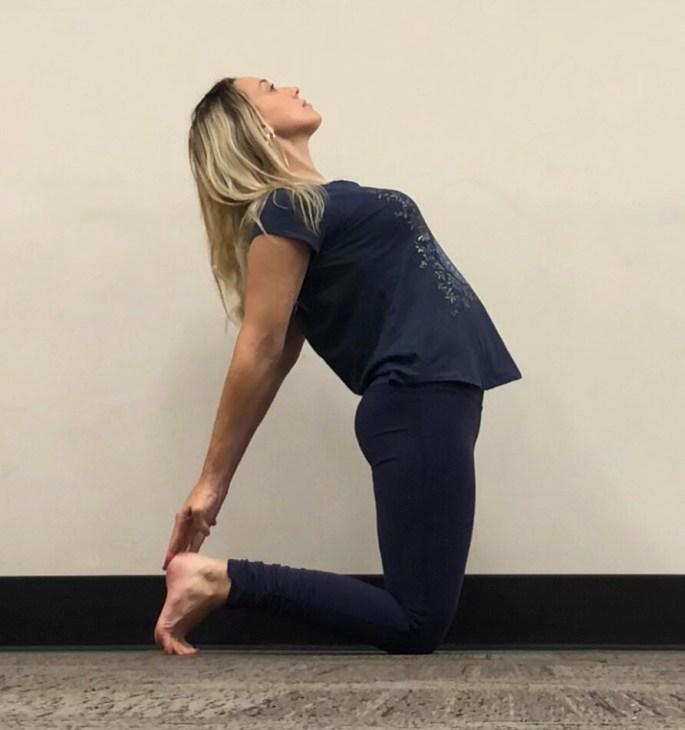
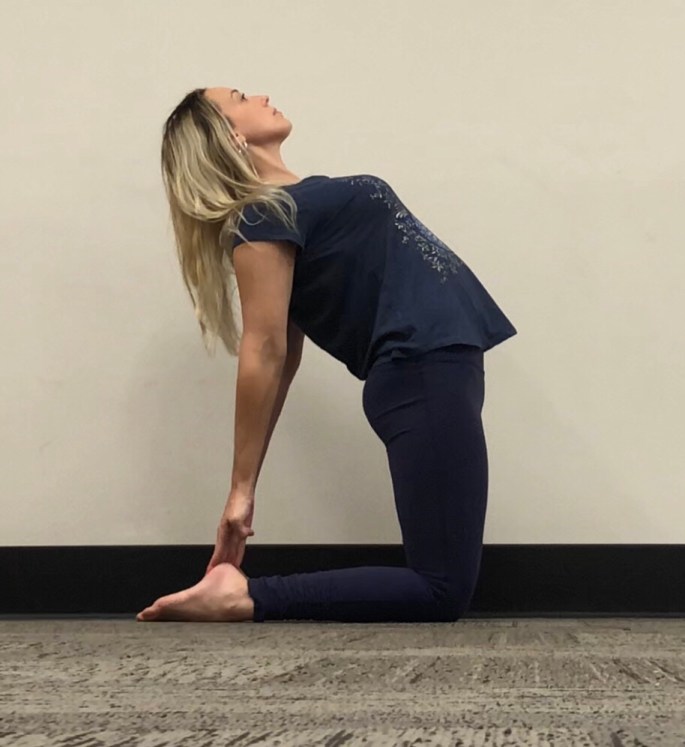
From table top, come up to your knees. Place your hands at the small of your back. Press your pelvis forward as you draw your elbows together behind you. Lift the chin and reach the collarbones to the sky. Hold for 10 seconds and repeat 3 times. If that was very easy, you can try for for a deeper expression: curl the toes under and see if you can reach back for your heels. If that’s still very easy, then uncurl the toes, so the backs of your feet are laying on the ground, and reach for the heels again.
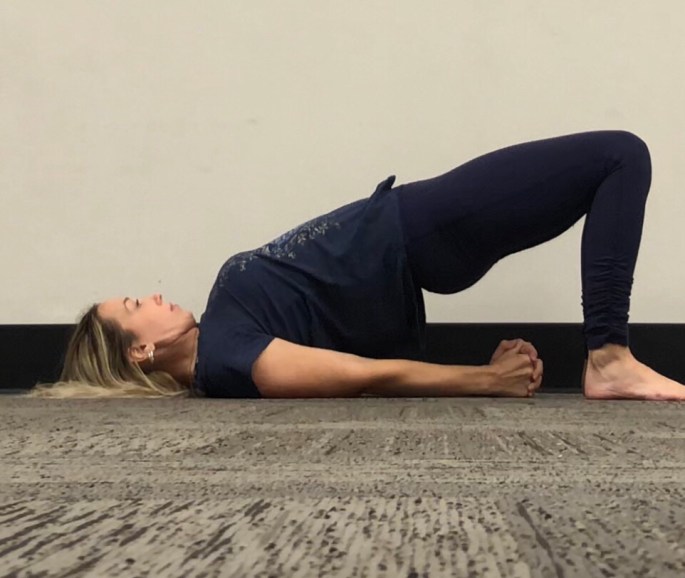
Next try for bridge pose. Roll on your back and plant your feet on the floor with knees bent. As you lift your hips to the sky simultaneously roll your arms together underneath your back. Try to clasp hands and keep rolling, trying to get the arms together. Squeeze your glutes and hollow out your lower belly. Lift the chest. Hold for 6 deep breaths and come down. Repeat 2 more times, if you’re not in horrible discomfort.

Then moving to modified fish pose. Laying on your back, prop your upper body up using your elbows, allow your head to drop back. Hold for 6 relaxed breaths

Relax back into your back and take rest. If your back is talking back to you, bend your knees or place a blanket under them.

The purpose of that flow wasn’t to get into deep backbends but to release your tensions in the front body and to calm your nervous system. Practicing this everyday if you have poor posture will help greatly improve that posture.

🦋Meditation and Mantras:

Visualize the chakras that were discussed in the last post, seeing them glow with their associated colors. You can practice this through out the asana practice or after. With each inhale see a yellow light glow grow into the heart chakra turning into green, follow it to the Thymus chakra turning it a light green blue and continuing to the throat chakra turning it a light blue turquoise. On the exhale see the reverse pattern all the way back to the solar plexus chakra.

The Bija Mantra for the Solar Plexus Chakra is Yam, for the Heart Chakra it’s Ram, and for the Throat Chakras it’s Ham. You can repeat them each in a row or work on a specific chakra at a time depending on your intention in the pose. The sounds of these mantras resonating internally is meant to stimulate the chakras. It helps to visualize the chakras as well.

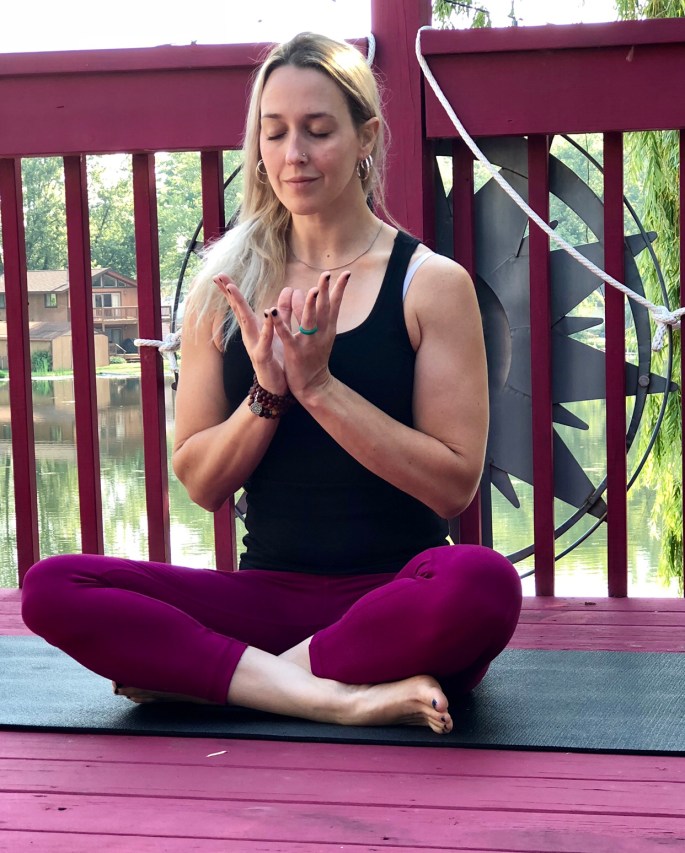
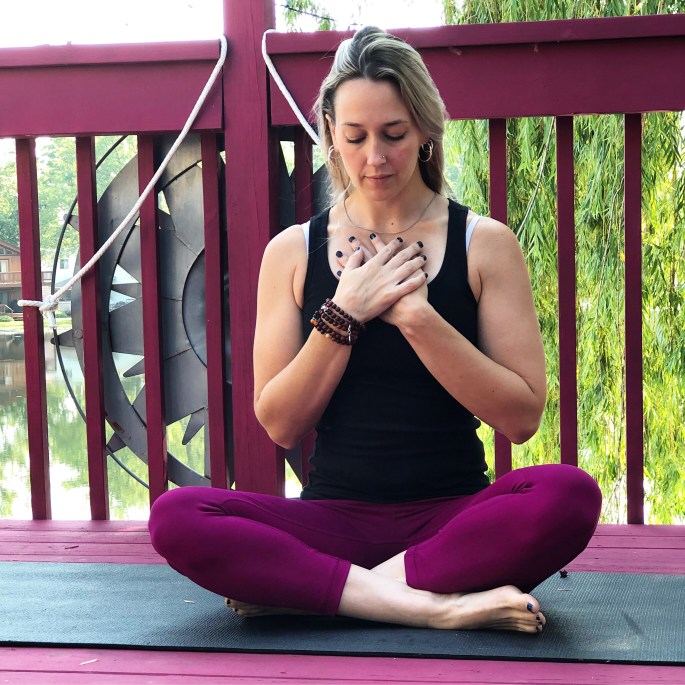
🙏Mudras (see top picture) :

Mudras are used to connect the energy within our energetic channels in a specific pattern.

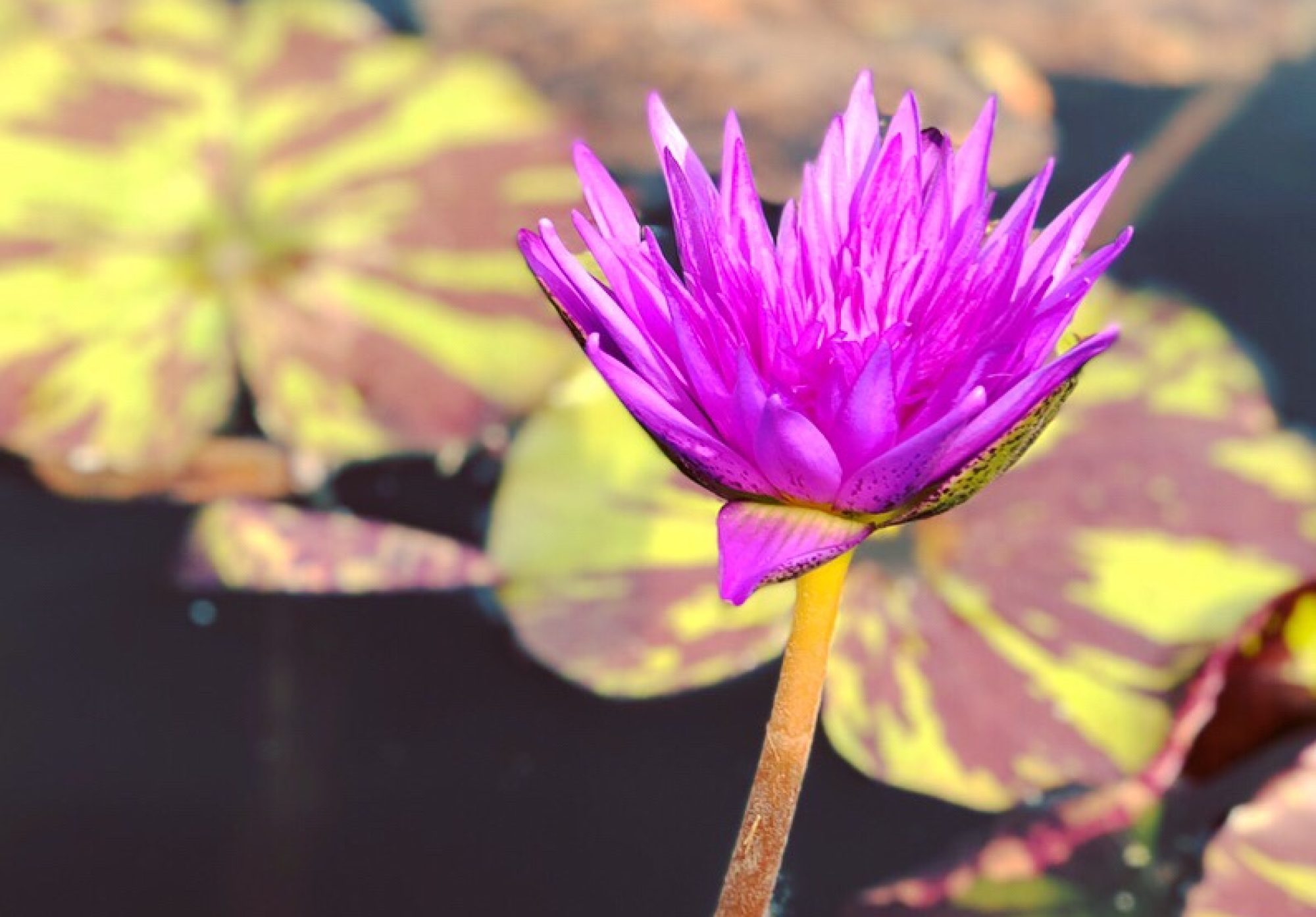
A excellent mudra that I use is the Padma Mudra, aka Lotus Mudra, at the center of the chest. Placing the pinky fingers together as well as the thumbs and allowing the fingers to slowly blossom upwards. It helps to meditate on a lotuses journey from the muck into blossoming above the water. Another great visualization is to see a closed lotus in the center of your chest slowly opening up, allowing love to enter and becoming pure love yourself. It’s a very grounding and loving Mudra that brings peace and self awareness into the users attitude. 💚
Backbends Part 2: That Chakra Solution

Without going down the amazing 🐇 Rabbit Hole that are the Chakras, I will “briefly” explain the Chakras and then the chakras that are directly (and not the ones indirectly) affected by backbends.
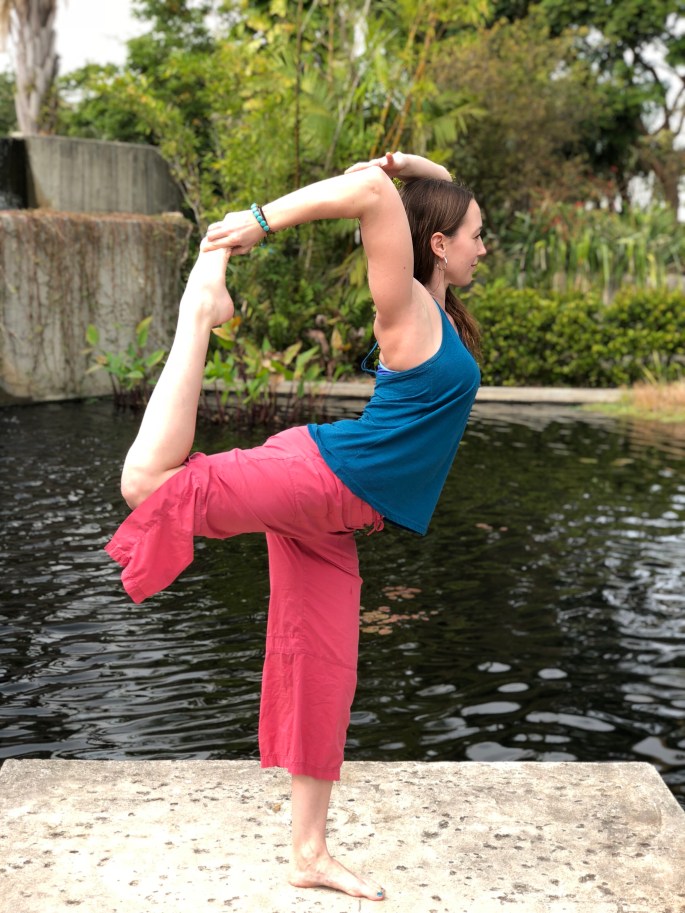
The Chakras are best thought of as energy vortexes that filter our world through their lenses. Each lens has a different mission in its role in taking in our world. We then assimilate ourselves based on the way that energy was gained, digested and absorbed.

Note: There have been very limited scientific studies that prove the chakras physically exist. If you are a skeptic, I want you to view them as a means or a map for understanding our natural tendencies. The most interesting thing about Chakras are they might not physically be in the area they are depicted but they do influence that area and the emotions associated with it. Please, read on…

💛💚💙The four Chakras directly involved are:

  • The Manipura Chakra (General Solar Plexus)

  • The Anahata Chakra (General Heart)

  • The Thymic Chakra (Secondary Chakra)

  • The Vishuddha Chakra (General Throat

What these chakras can do:

  • 💛The Manipura Chakra (General Solar Plexus): Resides a few fingers above your bellybutton. governs your core muscles, digestion, and it’s glad is the pancreas It is responsible for your sense of self worth, inner strength, drive and competitiveness. It is often described as “the seat of the ego” and, when hurt, will bring the higher chakras down with it. All chakras behave this way. The color often associated with it is yellow or gold. It governs our image and treatment of food and our diets in connection with our mental states. It’s developmental stage is post puberty into early adulthood. This chakra is what we tap into to know our boundaries. (Now, image how that chakra is used in a backbend)
  • 💚The Anahata Chakra (General Heart): Resides along the sternum. Is responsible for your ability to love unconditionally, to feel sympathetic and give empathy. It is often described as the “saints or bodhisattva chakra”. It governs the heart, chest, and lungs, it’s gland is the Thymus (but this also is a chakra in itself and will be addressed). The colors associate with it are often green or light pink. The age is develops most is our mid-20s. It governs our ability to forgive, feel and give love, and to know when we need to heal ourselves. Now, again, imagine using this in a backbend posture.
  • 🦋The Thymic Chakra (Secondary Chakra): This is a very powerful chakra not included in the 7 main chakras. This chakra resides in the upper heart area. Sometimes referred to as the “Higher Heart Chakra”. The colors associated to this chakra are Aquamarine, light teal, and soft pink. Medically, the Thymus plays a critical role in our T-Cell production. Located between the heart and sternum and is most active from neonatal to pre-adolescents. By the teenage years it begins to atrophy and it usually stops working completely around 50 years old, being replaced by fat. 🦋The Thymus Chakra is responsible for bridging the gap between the heart chakra’s emotional nature and the throat chakra’s more rational nature. It allows us to align our hearts desires and communicate that with our world. It’s where the intent of our words comes from. This chakra is attributed to the deep breath we take before we speak consciously. When this chakra is open we will only speak from a place of love and are able to create a world of joy and compassion for ourselves and others who encounter us.
  • 💙The Vishuddha Chakra (General Throat) Resides at the center of the throat. Is responsible for your ability to communicate and to listen, to create through your words and actions, and realizing your purpose. It’s associated with all the muscles required for communication as well as the neck and shoulders. The gland associated is the Thyroid gland. The colors associated to this chakra are turquoise and light blue. It develops strongly in our early 30s. It governs our ability to find our purpose, to communicate our ideas, to listen and absorb thoughts from our peers

When we are rejected, have had our “heartbroken”, have had our words and ideas silenced or simply not heard, have carried the weight of feeling unloved and tossed aside, and/or have experienced severe regret that we can’t take back; those 4 chakras are responsible for our perception that caused us to feel this way.

Physical appearance is the first obvious sign to the outside world. Someone who has experienced the above will protect their heart💔. They will try to hide their chest and lower their heads. This causes the muscles around the heart to cave inwards, as if to pull the heart deeper into the body. They close off their throat so they don’t say anything foolish. This causes the muscles in the front body even more stress from the weight of the head. They hunch open their backs as if they have given up and are thus allowing their backs to receive the punishment because the back can, generally, take abuse.

Emotionally, when someone is hurt in the areas of these four chakras, they withdraw, they don’t take risks, they question their worth, they feel invisible (partly because they are in self preservation mode), and they don’t contribute creatively. They can be mistake as shy, inconsiderate, lazy, or introverted to a fault.

Spiritually they become very cynical. They’ll scoff at prayers and meditations, they loose their ability for find joy in activities like dancing and singing, they find no joy in any leadership role and can loose the ability to see any goodness in the world.

In reality, they have been beat down and need to remember their worth, their voice, and that there is good in their world.

When we understand which chakras are involved and the roles they play we can address the issue of poor posture and the fear of backbends.

BACKBENDS ARE SCARY BECAUSE WE EXPOSE OUR HEART AND THROATS. Now, when we see backbends from the angle of the chakras we understand what’s holding us back. Our perception of backbends goes from a image of a contortionist to that of someone who’s simply lifting their chin and drawing their shoulders back and becoming vulnerable yet confident.

Backbend asanas, in the spirit of yoga, are expressions for and from the Soul and Source. A learned practitioner will approach the pose with the chakras in mind. As mobility increases they will become easier. As confidence in your ability increases so will your proprioception*. You will simply know how far is too far.

👉Proprioception

[prō′prē-ō-sĕpshən]

1 The unconscious perception of movement and spatial orientation arising from stimuli within the body itself. In humans, these stimuli are detected by nerves within the body itself, as well as by the semicircular canals of the inner ear.

The American Heritage® Science Dictionary Copyright © 2011. Published by Houghton Mifflin Harcourt Publishing Company. All rights reserved.

*Neurological ailments have an effect on this and can hinder it. But, chances are, if you have a neurological disorder you already know that.

💚Another thing to mention:

Just because a yoga practitioner can go into a deep backbend does not mean they have balance in their chakras. They may just be flexible. Others are hurting themselves and many will admit to that further down the road in their yogic journey.

💛💚🦋💙Come back her in the next two weeks for the last part ❤️Backbends Part 3: The Techniques

Backbends:

Backbends: Physical Ramifications (Part 1 of 3)

As a species, we need to do more backbends. We evolved to gain an ability to walk upright. Our pelvis needs us to move in all the directions we’re built to in order to operate efficiently.

I’ll explain the physical ramifications in part 1, The Chakra Solution in part 2, and the techniques towards more openness physically, mentally, and spiritually in backbends in part 3.

In my experience, working with clients from all over the world, we need to remember the functionality of our spines, hips, and shoulders. We become so consumed with productivity that we sacrifice our bodies to survive. Seems counterintuitive.

When we close off the chest and hunch forward we’re causing a couple things to happen to our systems:

1.)Our back muscles become over taxed and loose the ability to squeeze the shoulder blades into flexion. Our chest muscles suffer the opposite effect; they can’t relax. Your giant head needs support and they now bear the burden. 🤬🤬🤬

2.) We suffer digestive problems because our ribs are moving closer to our pelvis and squashing our organs. 😦

3.) Our jaws tighten up because the neck muscles are now being strained too and we can start grinding teeth and suffering from headaches. 😬

4.) The hips lock up! This is more common then you think (if you’re not in the fitness industry). You loose the ability to squat down low and you can feel like you’ll fall backwards when your sit with your legs in front of you or in a butterfly position in front of you. 🙁

5.) We stop raising our head and pulling shoulders back and down all. together…For days, weeks, or months. 😱

Physical ramifications are just half to story. Our ability to interact socially can be impacted by poor posture and the body language it emits. Someone who is hunched over could appear to be closed off, unapproachable, not engaged, hiding something, and weak or ill. This could lead them to miss opportunities like getting a job due to appearing too introverted or secretive (I’ll touch on that in the next section). 👉👉👉The body language that poor posture communicates, and it’s physical effects, can be changed if the intention to change it is approached from the right angle. It is of great importance that the physical as well as the emotional bodies are addressed.

The Chakras in the heart, chest, and throat all contain a solution to poor posture. The problem has a Yogic solution. I’m not saying it’s an easy solution.🧘🏼‍♀️ Check back here for the part 2, Backbends: The Chakra Solution ☸️

Cat and Cow Poses are Essential!

Cat & Cow Pose (Marjariasana & Bitilasana) are probably the most important yoga poses for everyone’s asana practice. Moving through the these two planes of movement is essential for understanding the spine, pelvis, and rib cage relationship.

Cat and Cow movements directly work with the Sushumna Nadi, which is the large energy pathway that rides along the length of the spine) and the Nabhi marma point (bellybutton). These movements work with the 5 chakras along the spine as well as involving the digestive system, the lungs, heart, and lymphatic system. The movement alone has a freeing and vulnerable quality to it. By practicing it you can begin to see changes in self confidence, self expression, and self love. ❤️

I, personally, begin Every. Single. Class with a Cat and Cow warmup. Once the practitioner understands these movements they are better set-up to build a better mind/muscle relationship with their bodies. This doesn’t just apply to yoga but to almost any exercise and any lifestyle.

These two postures bring movement into the spine, shoulder, and hips. They suggest more movement for the forward and backward tilt of the hips and bring more awareness for the action of the pelvis, core, and spine. Those with tight hip flexors (muscles that could prevent you from sitting on the floor with legs straight out without felling like you’re leaning backwards) greatly benefit from practicing these two postures together.

🌑 In yoga we couple the movements with a breathing technique. We come into a table top position (hands and knees) with wrists under shoulders and knees are hips width apart. Also, toes are NOT tucked under. I suggest closing your eyes to better get a feeling of your body. Doing these movements in front a mirror first can give you some insight too.

👉 Treat your pelvis as an actual bowl filled with water. Spill the water out in Cow and retain the water (don’t let it spill) in Cat.

🐂In the cow posture we inhale and “spill the bowl out”.
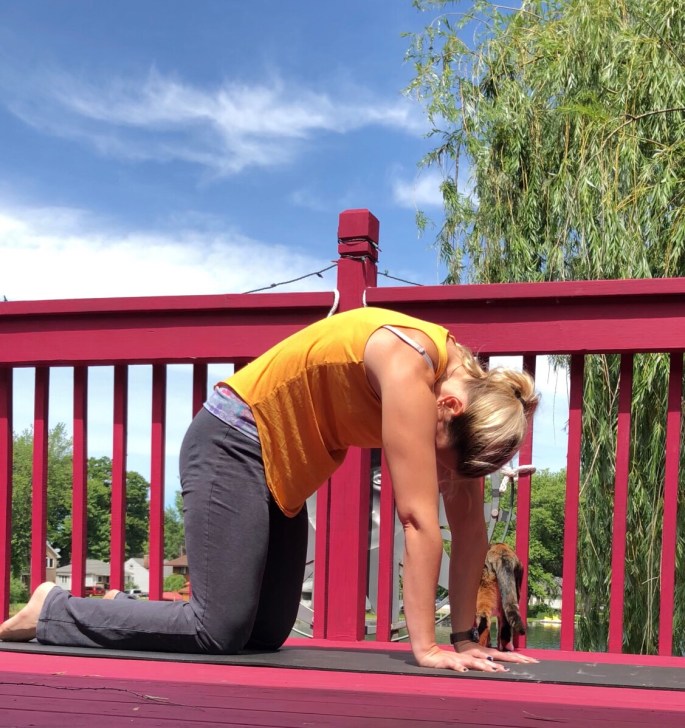
We first lift the tailbone towards the sky while the belly drops down towards the floor. Then the shoulder blades also draw towards each other and, lastly, the head lifts. A full and complete inhale inflates the diaphragm and allows the backbend to be softened and not as intense. So the individual doesn’t hinge too much in their vertebrae.

🐅In the cat posture we exhale and “keep the bowl full”
First begin to tuck the pelvis in, then arch the back, followed by the neck and a chin tuck. Remember to draw the bellybutton towards the spine and press deeply away from the floor allowing the shoulder blades to draw away from each other.

These two movements are excellent as warmups before exercising and are beneficial for daily experiences as well. In most industrialized nations these postures are excellent for brining the spine, hips, and shoulders back into agreement.

Happy practicing!🌚

Kuan Yin’s Holiday

In 2018, April 4th is Kuan Yin’s Birthday. Her birthday is 19 days into the second month on the Chinese Calendar.

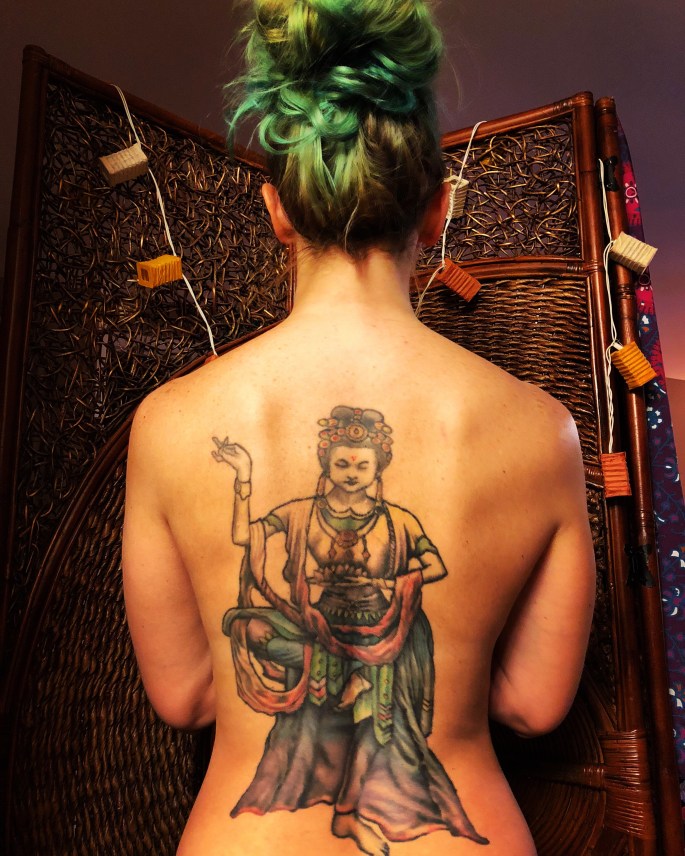
When I was 23 I started the process of getting a Kuan Yin tattoo on my back. 7 years before I had already converted to Buddhism and I wanted an avatar to be present on my body. I had read that when someone sees an image of Buddha they will be blessed to see infinite Buddha’s everywhere. I opted for a female bodhisattva because they inspire compassion.

Originally, I was going to get Green Tara. She is a bodhisattva in the Tibetan tradition. She is the Buddha of compassion in action. I found an image that was connected with her. Turned out the artist that had painted the image I had seen had painted some of Kuan Yin. The symbolism and depth that was captured in his paintings made me realize I needed to know more. That artist is Zeng Hao.

I went into deep lengths to understand this goddess/ bodhisattva and discovered that she was exactly what I wanted on my body forever.

Kuan Yin is an ever evolving image of love and compassion. The myths and stories surrounding her go back as far as tribal shamanic times in China. She has transformed from a primal mother goddess into a Buddhist deity. From a mountain spirit to a goddess of the seas. She transcends religion in the east and is worshiped in Taoist temples and Buddhist temples. She is the goddess of children, protection, mercy and compassion.

☸️ Kuan Yin’s mantras:

Namo Guan Shi Yin Pusa

“I take refuge in the bodhisattva who hears the cries of the world. ”

Om Mani Padme Hum

” The Jewel in the Lotus. ”