The untapped energy within

What if you found a way to harness more energy but first, you had to become the vessel for that energy?

This is not magic nor a new concept but it is an often understated and over looked reason as to why you should drag yourself to do something that you don’t have the energy (yet) to do. We tell ourselves “ I know I’ll feel better after I get into a habit” but the majority of us, who don’t approach fitness with the right mindset, never stick it out long enough to truly notice the returns on our effort.

Often times when we start a workout routine we see it in terms of minutes that drag on or a mountain that needs to be climbed. Our mind will try to convince us that our attention is better applied elsewhere and the workout feels discouraging. We sometimes even try to look too far into the future and believe a certain end-goal “look” is the target. This mindset leads to mental fatigue, resistance, and believing ourselves to be “less” when we believe we’re not actually making head way. We keep moving the goal post around and still end up dissatisfied

This is where a yogic mindset becomes the magic sauce. Yes, I said it wasn’t magic, but it honestly can be considered magical once you see how it shift everything. When we treat our workouts like a practice that builds day by day to a goal of being more capable of holding energy than the day before, it seems to turn the mountain into more climbable mole hills. This, coupled with a “play and discover” mindset, is a recipe for success. Yoga means union, we must connect our desire for more physical activity to our core essence. It needs to become a part of who you are now if you want to see changes.

The energy your body can expend is increased through putting it through periods of stress that it must adapt to. When this is coupled with a diet that is fresh, nutritious and complete AND a knowledge of the energies associated with each body part, the effects happen quicker. Scientific research proves an active lifestyle increases over all wellbeing, mobility, and longevity. The question you should ask yourself is “What part of me will stop me from being my most energetic self?” Meditate on how you plan on dealing with that part of yourself. That part might need to starve or you might be able to work around it (or with it) if you identify it as a necessary part of the life you wish to live.

Tips:

Open your mind to your inner child:

Ask them what their idea of playing is, or better, ask them if they could participate in any physical activity with a friend or a bunch of friends, what would it be? Don’t fall into the trap that physical play time is just for developing young bodies. Go Do the the thing your younger self would hope you would do.
Get over yourself:

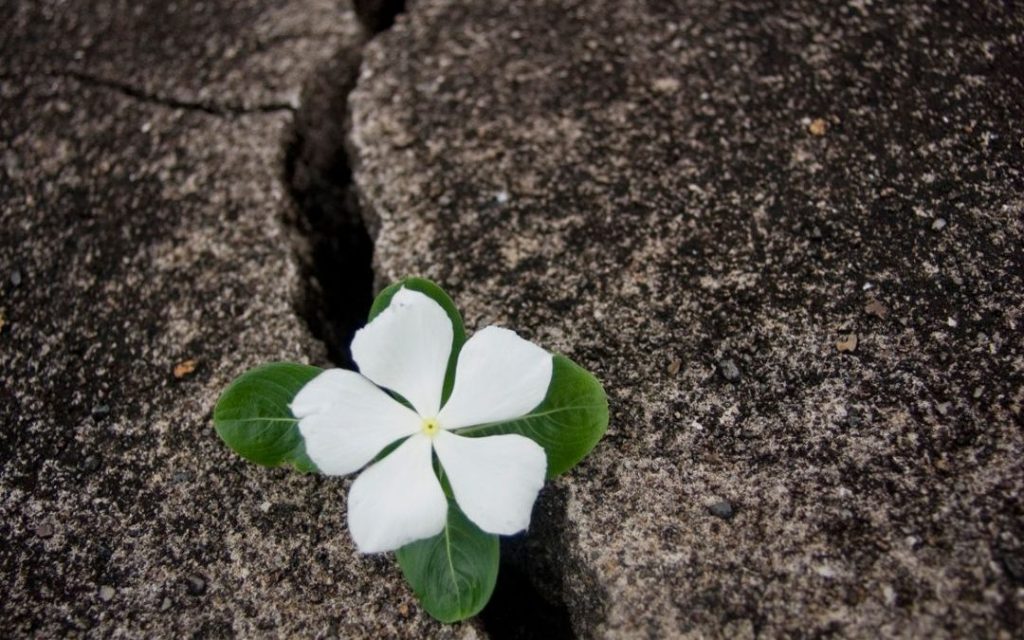
Sometimes, I feel that pressure to perform well around others. I would rather blend in than stand out for something embarrassing. My first yoga teacher told me that “Shyness is a disease of the ego”. This means that we think ourselves so important that we assume everyone else is thinking about us. Now, this might be due to an unresolved trauma, but typically it’s something we’ve been allowing to fester for far too long in our psyche. The truth is, we are a part of the whole, wether we like it or not. I have to get over myself in order to make myself move forward for myself and for all of humanity. You might have to tap into a different version of yourself in order to propel yourself towards what you really want. Make sure that version you create feels authentic and not like another mask that draws in shame from within.

Prove it to yourself:

Track the times you have been active and how you felt before and after by days, weeks, and months. Stick this out for a year at least to get some good data for yourself. 😉 Any good trainer will tell you that progress takes consistency.
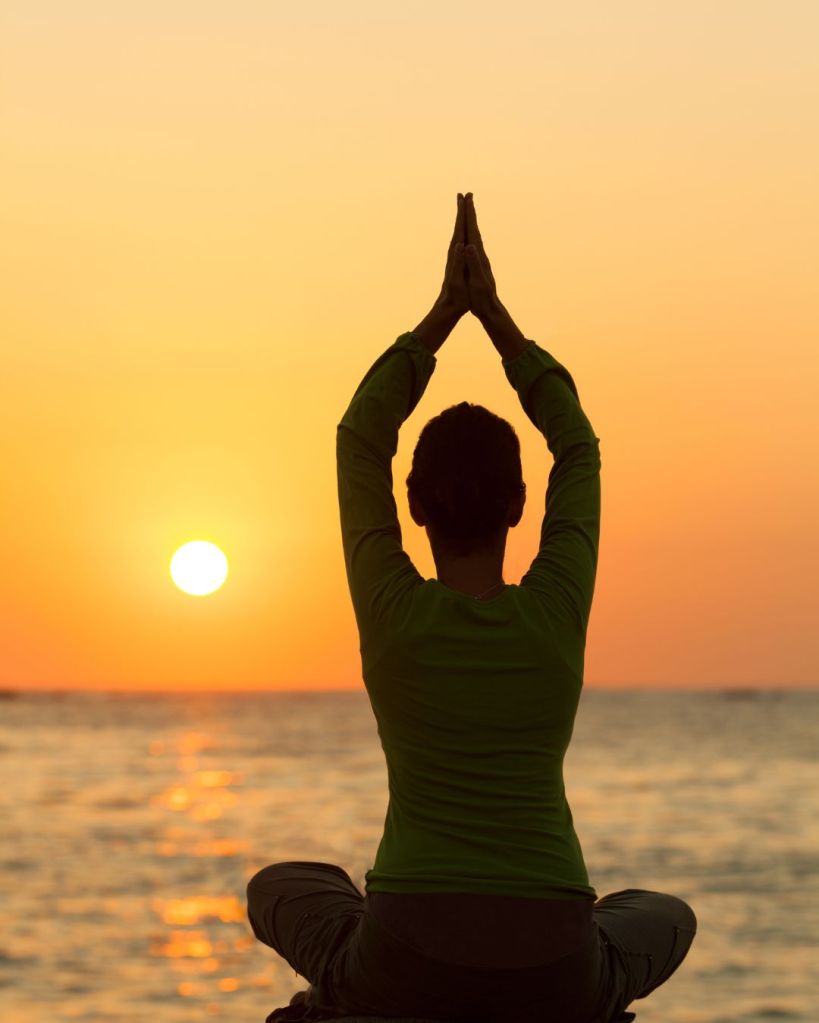
So, the next time you’re dreading your “new fitness routine”, try seeing it as increasing your capacity to hold energy and raising your vibration overall.

My Top 5 Yoga Accessories

Do you NEED accessories for yoga? You probably already know that you don’t. Yoga can be done anytime and anywhere. It is the unifying of our body, mind, and spirit. There is no mat required for that.

But, in my 20 Years of practicing yoga routinely, these are a few tools I have found that I like.

1.) My Mat: I know, I already said you dont need one…but it makes floor asanas more comfortable and it symbolizes the act of practicing the postures. My mat gives me a flat, blank space in a house of chaos and kid’s toys.

2.) My Blankets: I tend to get cold when I’m meditating and it’s very distracting. The blanket not only keeps my integumentary system warm and calm, but I can also use it, rolled up, to support my hips and ankles should they need more cushion.

3.) My Blocks: Blocks are super helpful when you’re just going into a pose to feel the shape of it on your body but you can’t reach the floor OR if you’re trying to add another element into a pose that either challenges the strength or the depth of the stretch. IMO: Blocks check the ego too and remind you to stay with what is.

4.) Incense and Candles: I love burning incense when I have time to go into a deeper meditative yoga practice. I believe it connects me with my root chakra (the sense of smell is governed by this chakra) but mostly, it makes me feel like I just walked into a holy space.

5.) Music to set the mood: I have yet to enjoy a silent yoga practice that isn’t outside in nature. In Nature the sounds are still everywhere but are enjoyable. In my home, I hear the dishwasher, the kids, and my own self yammering on about dumb crap in my brain. If I need a quick yoga break, music is my fastest way to send me into the right mindset and smooth out any franticness I might have been experiencing .

Do you have any accessories you like?

Leave a comment below.

relief from overwhelm

Our world can often appear to be a very scary place. The violence, greed, apathy, and suffering that happens is something that can not be ignored and shouldn’t be. We should be responding to it and doing our best to relieve it where it shows up. This is true even in our own bodies and spirit.

When we find that we’re feeling additional suffering inside ourselves due to the pressures we perceive from the world, we need to relieve them as soon as possible. Not in the “self gaslighting” way, although that sometimes does work as a way to distract and reevaluate, but in a way that restores us to peace. The same peace we can share back into our world.

Modern yoga and traditional yoga offer many potent methods to help our bodies shed suffering that has been trapped in our bodies. I have my personal favorites and those are what I will be sharing with you.

When we are trapped in our nervous system’s overload, our minds don’t get a chance to operate in a way that allows us to see the “Long Game” or the “Big Picture”. We behave as if the threat is near and present… and when it’s actually not we become hyped up with nowhere to go.

Practice 1: I want you to take a deep breath. Relax your shoulders, and shake out your arms. You can also do some side bends and twists here. Now, I want you to watch your body as if you’re watching someone else’s. Analyze the sensations coming in as you bring to mind your next thought: “I am afraid of -blank- “. Chances are you’ll be able to see the stress retighten it’s grip as soon as it comes to mind. See if you can separate yourself from the stress flowing through you. As if it’s a chemical that’s seeping back into your body… because it is.

By seeing where the stress is being held in your body, you will be able to see it go too.

Practice 2: Seated in a comfortable spot with a blanket if you tend to get cold, take a deep breath in and a long breath in. Next, count to 5 on the next inhale and 5 on the exhale. Keep the count of 5 for the inhales and exhales but now lift your chin a bit, press your heart forward and relax your jaw. Now, stop counting to 5 for each breath and start counting each inhale and exhale as 1. Get to 10 and repeat 3 times. When you are done, slowly wake up your 5 senses one at a time. Notice the space in your body that has released your previous tension.

Practice 3: check out my 3 part blog series on heart openers. The Link is here. These specific postures help to ground us in the present (connecting to our Muladhara (Root) Chakra. The poses also bring energy, movement, and relief to the areas most effected by chronic stress, our Manipura (Solar Plexus), Anahata (Heart), and Vishuddha (Throat) Chakras.

Balancing the pressure of wanting to fix the worlds suffering, as well as our own and our loved ones, is paramount to our yoga practice. Yoga will give you the tools to make the world a more peaceful place for yourself and others. It is a practice though, and will be a practice as long as suffering exists. The important part is that we see that and always choose Compassion, Kindness, and Wisdom.

The Importance of Patanjali’s Yoga Sutra

Caption: The Sage Patanjali is depicted with serpents. The myth of Patanjali says that he is the incarnation of the Serpent-God, Adisesa. He is a follower of Lord Shiva and so wanted to spread the message of Yoga that when he heard a Yogi mother crying out for a child, he came to her as a son.

The Yoga Sutras is an ancient sutra or guide that is considered the bedrock to many yoga practitioners. Taking the time to read this short text is considered one of the most important steps in a yogic practice and should not be overlooked. The wisdom contained in the 196 verses contained within are inspiring and eye opening to the truth of the practice of YOGA. This sutra literally lies out the steps towards Samadhi or Nirvana.

This Classic Yoga guide was written over 2 thousand years ago. It is believed that not one man is credited to its genius but that many people assumed the author name of “Patanjali’ and refined this sutra into what we know today. This book is used in every-single-yoga teacher training and lays out the ethics and mindset a yogi needs to cultivate to see quick progress towards Samadhi.

Two Thousand years ago, Yoga was a system of meditation and a method to gain control over the senses.  Today it is so much more. So much so that the original messaging can get lost in the asana practice.Yoga translates “TO YOKE” which means to connect with the Highest Self. We gain insight on how to achieve this Yoga in the Yoga Sutras as well as our physical practice.

The Yoga sutras comprises of the 8 Limbs of Yoga which serve as a guide to how best to achieve union of mind, body, and spirit according to the ancient sages. The Union described is a union of Mind, Body, and Spirit with the Divine Self. This can mean God, a Supreme Creator, Your Highest Self, Your True Nature, Etc.

A quick synapsis of the The 8 Limbs of Yoga is provided below:

The 8 Limbs of Yoga*

1.) Yamas (Wise characteristics for the outer practice of yoga AKA The 5 “Abstentions”)

  1. Ahimsa – Non-harming
  2. Satya – Commitment to Truth
  3. Asteya – Non- Stealing
  4. Brahmacharya – Merging with God/ Higher Consciousness/ Desires align with greatest good (sometimes also referred to as Sexual Purity I some schools)
  5. Aparigraha – Non- Grasping

2.) Niyamas (Codes for living Soulfully AKA The 5 “Observances”)

  1. Shaucha – Cleanliness
  2. Santosha – Contentment
  3. Tapas – Embracing the spiritual practice
  4. Svadhayaya – Regular Study of Spiritual Texts
  5. Ishvara Pranidhana – Prayers to the Guru

3.) Asana  (We now know this as our modern physical practice, but 2000 years ago this meant simply a meditation posture that felt comfortable and could be maintained for the duration of meditation… multiple Yoga postures became more common around the 12th century with the  Hatha Yoga Pradipika).

4.) Pranayamas (Breath Control techniques)

5.) Pratyahara (Withdrawl of the senses in Meditation)

6.) Dharna  (Focus in Meditation)

7.) Dhyana (Fixation in Meditation)

8.) Samadhi (Perfect Meditation)

The Limbs are not necessarily meant to be followed in order and are not meant to be fully actualized before any of the other limbs. The beauty of Yoga is in the journey. The waters are deep and paths many. This sutra is just the tip of the iceberg. The average reader can finish the text in about five hours and benefit from it for years to come. Get your copy today and expand your yoga practice 10 Fold. 

*This outline guide above is not meant to be a substitute for reading the sutras yourself. There is much more inside of the sutras besides the 8 Limbs, as well as more in-depth explanation on how to achieve yoga in each Limb.